
Blog
Beginner’s Guide: What Keyboards Support Magnetic Keyboard Switch Technology?
With the rapid development of the keyboard market, magnetic keyboard switches are attracting increasing attention from gamers and keyboard enthusiasts. Compared to mechanical switches, magnetic keyboard switches can achieve adjustable actuation distance, rapid triggering, and more precise input control through Hall effect sensing.
However, many users new to magnetic switches have questions: Do all keyboards support magnetic keyboard switches? Can magnetic switches be directly installed on mechanical keyboards? The answer is no; not all keyboards are compatible with this technology. This article will help beginners fully understand the working principle of magnetic keyboard switches, compatibility requirements, and currently supported keyboard types, explaining why there may be conflicts.
What Makes Magnetic Keyboard Switch Different from Traditional Mechanical Switches
How Magnetic Keyboard Switch Technology Works
To understand why magnetic switches cannot be installed on any keyboard, it’s essential to understand their working principle. Magnetic keyboard switches use Hall Effect technology for detection. Inside the magnetic switch is a magnet; when a key is pressed, the magnetic field strength changes. A Hall sensor on the PCB detects changes in the magnetic field in real time and converts them into digital signals, which are then sent to the controller.
Mechanical keyboard switches, on the other hand, primarily rely on internal metal contacts for conduction. When a key is pressed, the metal contacts make contact, and the PCB recognizes the electrical signal to complete the input.
Magnetic switches do not require metal contact and can detect key positions in real time. However, precisely because they use magnetic field detection instead of physical conduction, the operating logic of a magnetic keyboard switch is fundamentally different from that of a mechanical keyboard switch, making the two types of keyboards incompatible.
Why Magnetic Keyboard Switch Requires Specialized Hardware
Many beginners believe that magnetic switches are simply a special type of mechanical keyboard switch, usable by replacing the switches on a mechanical keyboard. This is a misconception. A magnetic switch system is a complete hardware architecture, relying on the coordinated operation of a Hall sensor, PCB board, MCU controller, dedicated firmware, and driver software.
If any component is missing, the magnetic switch will not function properly. In other words, a magnetic keyboard switch is a complete input solution, not just a single product.
Can any keyboard use a magnetic keyboard switch?
Why do mechanical keyboards usually not support magnetic keyboard switches?
The PCB design of a mechanical keyboard is used to detect the conductivity of metal contacts, while magnetic switches need to detect changes in the magnetic field. This indicates that mechanical keyboards and magnetic keyboards have many differences:
- Mechanical keyboards do not have Hall sensors on their PCBs, and their control chips do not support analog signal acquisition.
- Their firmware cannot parse magnetic field data, and their driver software lacks related functions.
- The switch interface designs are different; even if the magnetic switch can be physically installed, the system cannot correctly recognize key input.
In conclusion, mechanical keyboards are not compatible with magnetic keyboard switches; their operating logic and component requirements are vastly different.
What Happens If You Install a Magnetic Keyboard Switch on an Unsupported Keyboard
If a user forcibly installs a magnetic keyboard switch on an incompatible keyboard, the following situations typically occur:
- Keys are completely unresponsive; the system cannot detect input.
- The magnetic keyboard’s Rapid Trigger, adjustable actuation distance, and other functions will be disabled.
- Key functions and input latency will be abnormal.
Some users mistakenly believe that similar magnetic switch structures allow for direct replacement, but this is a common misconception. Whether a magnetic switch functions properly depends on the entire system, not just the switch itself.
Magnetic Keyboard Switch Compatibility Depends on the Entire System
The core factors determining magnetic keyboard compatibility include switch structure, Hall sensor layout, PCB design, control chip performance, firmware support, and software drivers. These components need to work together to achieve the full performance of the magnetic switch.
Therefore, when purchasing, users should not only focus on the switch model but also confirm whether the entire keyboard supports magnetic keyboard switch technology.
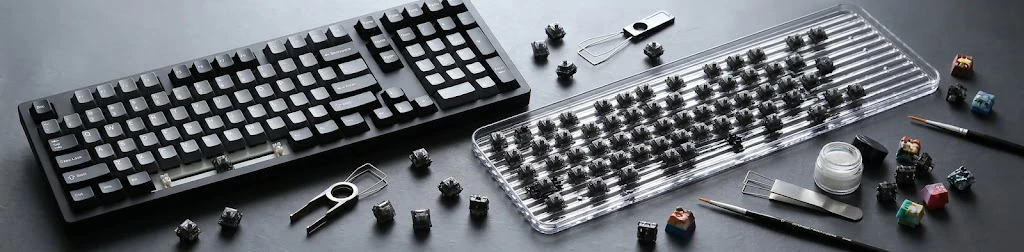
What Keyboards Support Magnetic Keyboard Switch Technology?
Dedicated Magnetic Keyboard Switch Keyboards
Currently, the most common solution is purchasing a native magnetic switch keyboard, as these products are entirely built around magnetic keyboard switch technology from the ground up. Equipped with integrated Hall sensor PCBs and dedicated magnetic switch firmware, they seamlessly support features like adjustable actuation distance, Rapid Trigger, analog input, and advanced calibration. For the majority of users, this is the most straightforward and seamless way to experience magnetic switch technology.
Gaming Keyboards Designed for Magnetic Keyboard Switch Technology
The e-sports market is the fastest-growing sector for the adoption of magnetic switch technology, driven by gamers’ extremely high demands for response speeds. The Rapid Trigger feature of magnetic switches allows a key to reset its actuation point the instant it is released, eliminating the need to wait for a fixed reset travel distance. This translates into more precise character movement, faster counter-strafing, quicker combo execution, and more responsive shooting control. Especially in FPS and competitive games, it delivers a distinct competitive edge. Consequently, many gaming brands have taken the lead in launching their own magnetic keyboards.
Custom Keyboards Built Around Magnetic Keyboard Switch Systems
Beyond the gaming market, the custom keyboard community has also begun to embrace magnetic switch technology. Some high-end custom products already offer features such as hot-swappable magnetic switches, open parameter tuning, advanced macro functionalities, and multi-stage actuation travel settings. For enthusiasts pursuing the ultimate personalized experience, these products offer a significantly higher degree of freedom.
As the custom keyboard market continues to evolve, the DIY platforms supporting magnetic keyboard switches will become increasingly diverse, representing a vast blue ocean of opportunities.
Key Components Required for Magnetic Keyboard Switch Compatibility
Magnetic Keyboard Switch Compatible PCB
The PCB is the core component that determines compatibility. A PCB that supports magnetic keyboard switches must feature a Hall sensor array, a high-polling-rate design, and a high-precision magnetic field detection system.
Since Hall sensors need to detect the position changes of each key in real time, the layout complexity of this PCB design is significantly higher than that of traditional keyboards. Without this specific architecture, the magnetic switches will not function even if they are physically installed.
Firmware Designed for Magnetic Keyboard Switch Technology
Firmware serves as the brain of a magnetic switch keyboard, enabling a wealth of specialized functionalities including Rapid Trigger, Dynamic Keystroke, Dead Zone Calibration, and analog input detection. Without the support of dedicated firmware, the core capabilities of magnetic switches cannot be leveraged at all.
Software Support for Magnetic Keyboard Switch Features
Modern magnetic switch keyboards are typically equipped with dedicated software or web-based drivers. Through the software interface, users can customize various personalized configurations, such as adjusting the actuation distance and setting key sensitivity. For magnetic switch users, the software ecosystem is often just as vital as the hardware itself.
How to Check Whether a Keyboard Supports Magnetic Keyboard Switch
Check the Keyboard Specifications
The most direct method is to review the product specifications. If a product supports magnetic keyboard switches, it will typically feature keywords such as: Hall Effect Keyboard, Magnetic Switch, Rapid Trigger, Adjustable Actuation, Analog Input, or Dynamic Keystroke. These technical terms generally indicate that the keyboard is capable of supporting magnetic switches.
Review Manufacturer Documentation
Before purchasing, it is highly recommended to carefully read official materials such as the product pages, technical datasheets, user manuals, and compatibility guides. Although some products advertise high performance, they might not necessarily support magnetic switch technology; reviewing official documentation can effectively help avoid purchasing mistakes.
Understand Marketing Terms Related to Magnetic Keyboard Switch
Different manufacturers may use distinct marketing terminology to describe magnetic switch technology. Common terms include: Hall Effect Keyboard, Magnetic Keyboard, Analog Keyboard, and HE Keyboard, among others. Although these names vary, they are fundamentally related to the magnetic keyboard switch, and understanding these terms allows you to quickly identify a product’s positioning.
Advantages of Choosing a Keyboard Designed for Magnetic Keyboard Switch Technology
Adjustable Actuation Improves User Experience
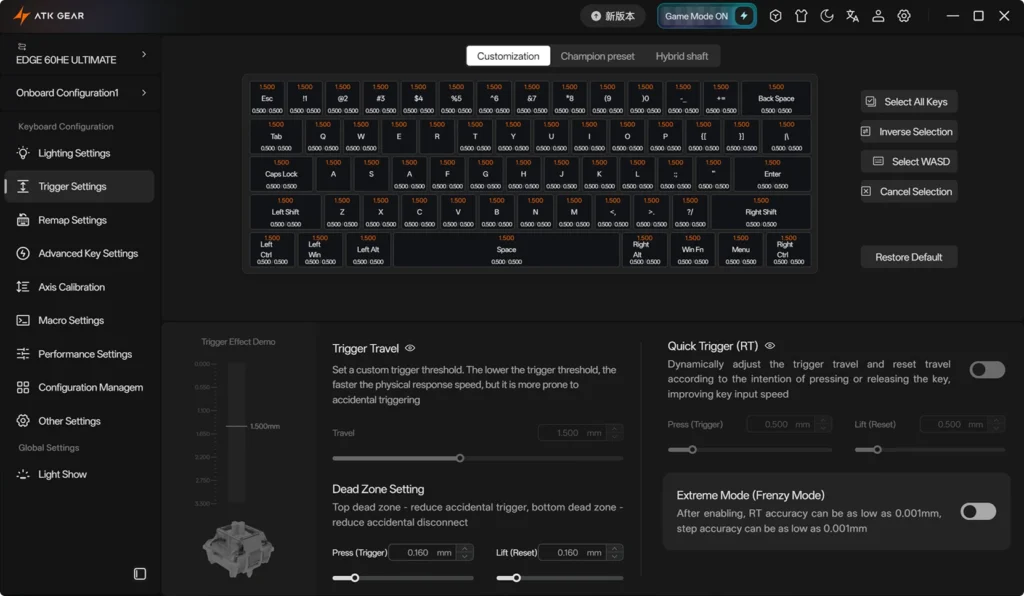
Adjustable actuation distance is one of the most acclaimed features of magnetic switches. Users can freely customize the actuation travel according to their needs—such as an ultra-sensitive 0.1mm trigger, a balanced 1.0mm setting, or a 2.0mm accidental-touch prevention mode. This ensures a much more comfortable and tailormade experience across various gaming and office scenarios.
Rapid Trigger Enhances Competitive Gaming Performance
Rapid Trigger is widely considered a revolutionary feature of magnetic switches by gamers. It offers multiple advantages, including faster release, quicker re-triggering, minimized action latency, enhanced input continuity, and superior character control precision. Consequently, magnetic switch keyboards are rapidly becoming a pivotal development trend in the competitive gaming market.
Long-Term Reliability of Magnetic Keyboard Switch Systems
By eliminating the need for physical metal contacts, magnetic switches resolve many common mechanical wear-and-tear issues. This architecture minimizes contact friction, prevents contact oxidation, and reduces input chatter (bouncing). While maintaining consistent tactile performance over the long term, it significantly extends the product’s lifespan—a level of stability that holds immense value for users.
Future Trends of Magnetic Keyboard Switch Technology
More Mainstream Keyboards Will Support Magnetic Keyboard Switch
In recent years, the market growth for magnetic switches has been remarkably rapid. Driven by decreasing manufacturing costs, maturing supply chains, growing user awareness, and increased brand investment, more and more keyboard manufacturers are launching magnetic keyboards that natively support magnetic keyboard switches. This technology is no longer confined solely to the esports arena.
Magnetic Keyboard Switch Technology Continues to Evolve
Looking ahead, magnetic switch technology will continue to advance. The industry is actively moving toward higher sensing precision, lower input latency, faster polling rates, smarter software ecosystems, richer trigger logic, and more comprehensive cross-compatibility designs. These innovations will further elevate the overall user experience.
Magnetic Keyboard Switch Adoption Expands Beyond Gaming
While the competitive gaming market originally drove the initial popularity of magnetic switches, their scope of application will expand significantly in the future. They are already making their way into office environments, programming workflows, and high-end custom keyboards. As users’ demands for input precision and personalization continue to rise, the magnetic keyboard switch will penetrate into a wider array of application fields.
Conclusion
Although the magnetic keyboard switch is rapidly becoming a pivotal development direction for high-performance keyboards, it fundamentally relies on Hall sensors, specialized PCBs, dedicated firmware, and robust software systems. Consequently, traditional mechanical keyboards cannot directly accept or utilize magnetic switches.
For users seeking to experience Rapid Trigger, adjustable actuation distance, and superior input precision, choosing a keyboard designed specifically to support magnetic keyboard switch technology remains the most reliable solution. As keyboard switch manufacturers continuously push the boundaries of technical upgrades, products supporting magnetic keyboard switches will become increasingly diverse, delivering a more flexible and precise typing experience for all users.