
Blog
What Is the Most Popular Mechanical Keyboard Switch?
As the mechanical keyboard market continues to develop, the mechanical keyboard switch has become a crucial factor influencing the user’s typing experience. Whether you’re a gamer, office worker, programmer, or a custom keyboard enthusiast, you’re increasingly focused on the differences in feel, sound, actuation speed, and lifespan among various keyboard switches.
However, there’s no single answer to the question of “what’s the most popular mechanical keyboard switch,” as different users have significantly different primary needs regarding switch types. This article will analyze currently popular mechanical keyboard switch types from the perspectives of market application, switch types, user needs, and industry development to help you understand why there isn’t a single “most popular mechanical keyboard switch.”
What Makes a Mechanical Keyboard Switch Popular?
Many people hope to find the “most popular” switch type on the market when purchasing a mechanical keyboard. However, the popularity of a keyboard switch is actually the result of multiple performance indicators working together. Even products from different brands with similar structural designs can have differences in actual user experience. Therefore, what truly influences market acceptance is the product’s overall performance.
Factors influencing the popularity of mechanical keyboard switches primarily include feel, operating force, travel distance, sound performance, and mechanical lifespan:
- Typing Feel determines the smoothness of keystrokes, rebound speed, and stability, directly impacting the long-term typing experience;
- Operating Force caters to different users’ needs for key pressure, balancing comfort and efficiency;
- Travel Distance affects the switch’s response speed and keystroke feel;
- Sound Performance, influenced by user preferences, has led to the emergence of different switches, such as quiet or crisp;
- Mechanical Lifespan reflects the switch’s durability, with long-life products maintaining stable actuation and rebound performance over extended periods.
Compatibility and application range also influence the market performance of mechanical keyboard switches. Standard switch sizes and hot-swappable designs make it easier for users to replace and experience different switches, driving market diversification. Truly popular keyboard switches achieve a good balance between feel, lifespan, stability, compatibility, and application scenarios, thus ensuring a variety of popular switch types in the market, rather than a single switch dominating the market.
The Most Popular Mechanical Keyboard Switch Types Explained
Currently, the most widely used mechanical keyboard switches on the market can be mainly divided into three types: Linear, Tactile, and Clicky. They offer different actuation methods and typing experiences, suitable for different user groups. There is no absolute superiority or inferiority among them; rather, each has formed a stable market based on different usage needs.
Linear Mechanical Keyboard Switch for Smooth and Fast Typing
Linear mechanical keyboard switches are among the most popular switches on the market, widely used in gaming keyboards and custom keyboards. Their characteristics include no tactile feedback during pressing, smooth switch movement, and uniform resistance, providing a smooth typing experience suitable for extended use and high-speed continuous operation.
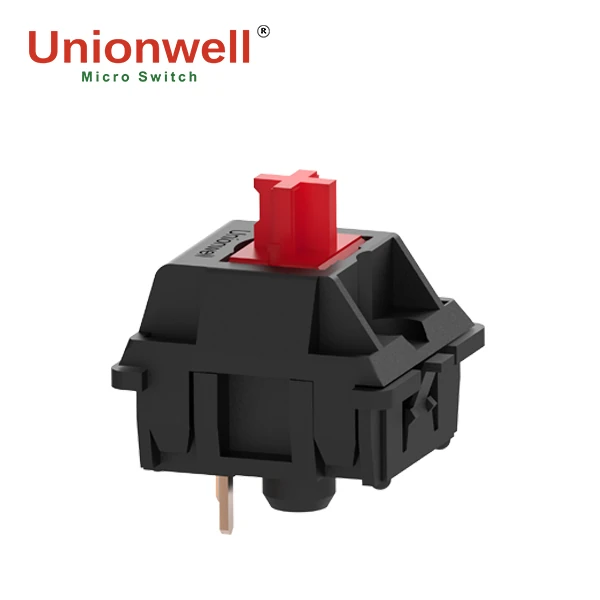
linear keyboard switch
Furthermore, the method of further improving smoothness through lubrication is very simple, making it popular among custom keyboard enthusiasts. Common representative products include Cherry MX Red and Gateron Red. Different brands vary in springs, materials, manufacturing precision, and feel; users should choose according to their own needs.
Tactile Mechanical Keyboard Switch for Feedback-Oriented Users
The tactile mechanical keyboard switch provides distinct tactile feedback during keystrokes. Users can feel the tactile feedback at the actuation point, making it easier to confirm key presses. For office workers, programmers, and text input users, this design helps improve typing rhythm and reduce accidental keystrokes.
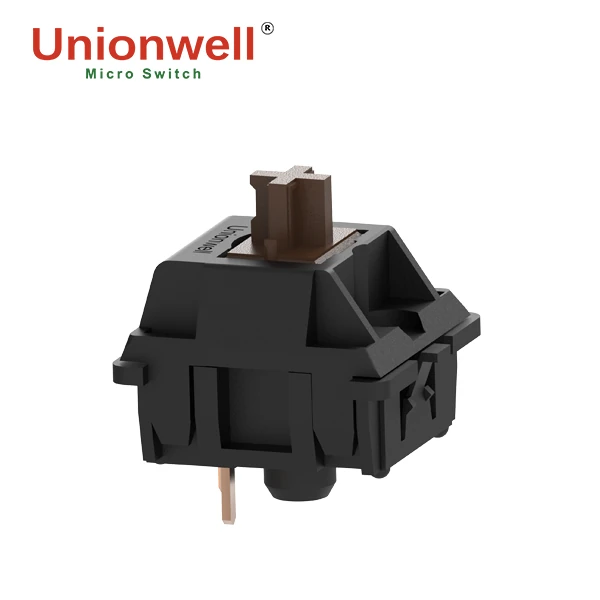
tactile keyboard switch
Compared to Linear switches, Tactile switches prioritize input feedback; compared to Clicky switches, they offer a clear feel while maintaining lower noise. Common products include Cherry MX Brown and Kailh Brown, suitable for office work, study, and everyday entertainment, thus maintaining stable market demand.
Clicky Mechanical Keyboard Switch for Audible Feedback
The Clicky mechanical keyboard switch is one of the most representative mechanical switches, combining tactile feedback and a clear click sound, providing a stronger sense of input confirmation and rhythm. Users can not only feel the tactile feedback but also determine key presses by sound.
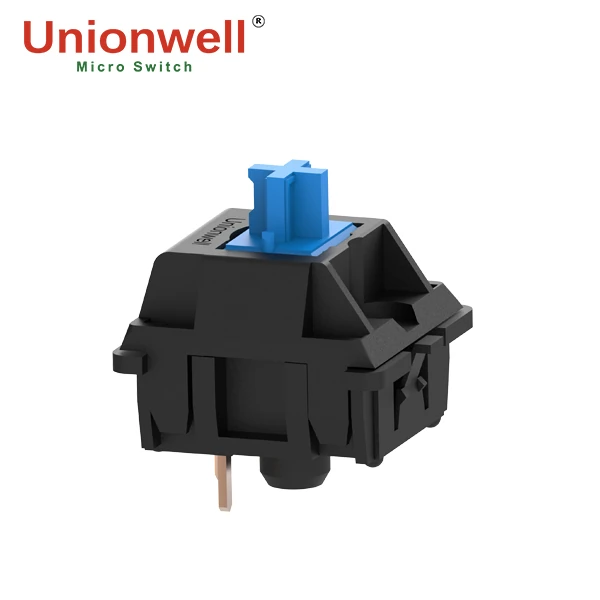
clicky keyboard switch
Representative products of this type of switch include Cherry MX Blue, which are suitable for users who like the mechanical feel of keystrokes. However, due to their louder sound, they are more suitable for personal spaces and should be chosen with caution for quiet office environments.
Popular Mechanical Keyboard Switch Choices for Different Users
Mechanical Keyboard Switch for Gamers
For esports gamers, fast response, stable actuation, and continuous input are key factors when choosing a keyboard switch. Linear mechanical keyboard switches, with their smooth pressing and even resistance, are well-suited for competitive games like FPS and MOBA.
However, different games have different switch requirements. Strategy games prioritize comfort during extended use, while fighting games focus on rapid presses. Players of these games may not prioritize linear keyboard switches; therefore, the choice should be based on the game type and personal habits.
Mechanical Keyboard Switch for Office and Professional Users
Office users perform a lot of text input daily, so comfort and stability are primary considerations. They tend to choose tactile mechanical keyboard switches or low-noise linear switches because these switches offer good typing comfort while maintaining low noise levels, making them suitable for office environments.
For professional users such as programmers, editors, copywriters, and data entry personnel, a mechanical keyboard switch that maintains stable triggering, reduces fatigue, and has a long mechanical lifespan is often more important than simply pursuing a particular popular switch type.
Mechanical Keyboard Switch for Keyboard Enthusiasts
In recent years, the widespread adoption of hot-swappable keyboard designs has further lowered the barrier to switch replacement, and more and more users are starting to try different types of keyboard switches. They pay more attention to the internal structure of the switches, lubrication performance, spring design, material matching, and overall consistency. They will lubricate, replace springs, and even replace the shell of their mechanical keyboard switches according to their preferences to obtain a more personalized typing experience.
New Trends Changing the Popularity of Mechanical Keyboard Switch
The mechanical keyboard industry has developed rapidly in recent years, and users’ focus on keyboard switches has shifted from primarily focusing on brands to now paying more attention to actual performance and user experience. The entire market is constantly evolving.
The Rise of Custom Mechanical Keyboard Switch
The development of the customization market has led to an increasingly diverse range of keyboard switches. More and more manufacturers are launching mechanical keyboard switches with varying actuation forces, material combinations, and internal structural designs to meet increasingly segmented market demands.
Today, when choosing switches, users no longer just focus on the brand, but place greater emphasis on smoothness, consistency, sound performance, and the overall typing experience. This shift in consumer attitudes is driving the entire industry to continuously improve product quality.
Magnetic Keyboard Switch and Inductive Keyboard Switch Innovation
In addition to mechanical switches, new technologies such as magnetic and inductive keyboard switches have gradually entered the market in recent years. These new keyboard switches offer new options for some high-performance keyboards in terms of actuation methods, adjustable actuation distance, and response speed.
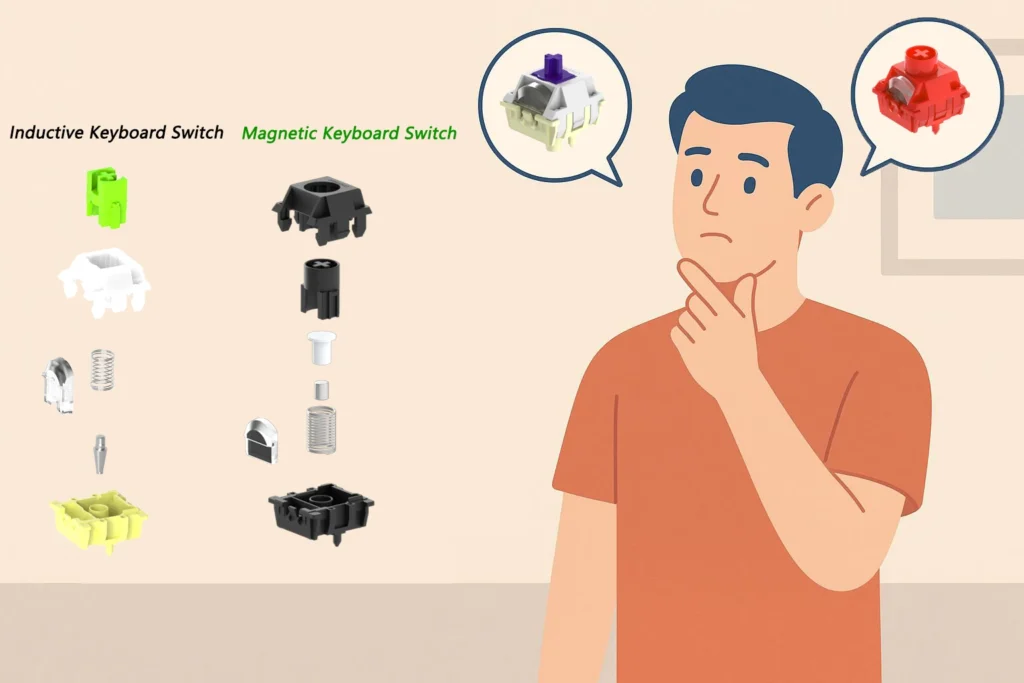
inductive keyboard switch and magnetic keyboard switch
However, these technologies will not replace mechanical keyboard switches at present. On the contrary, they will coexist with mechanical switches in various application scenarios for a long time, providing users with a wider range of product choices.
How to Choose the Right Mechanical Keyboard Switch?
Understanding popular products on the market is important, but choosing the right keyboard switch requires considering your actual needs, not just sales figures or online reviews.
Consider Typing Purpose
First, clarify your primary usage scenario before purchasing:
- If primarily for gaming, focus on responsiveness, continuous typing experience, and ease of operation.
- If primarily for office work, programming, or content creation, prioritize typing comfort, stability, and fatigue reduction after prolonged use.
- For custom enthusiasts, further consider switch design, lubrication space, and overall playability.
Only by clearly defining your primary purpose can you narrow down your choices and improve purchasing efficiency.
Check Switch Specifications
When comparing different mechanical keyboard switches, focus on parameters such as Operating Force, Total Travel, Mechanical Lifespan, Switch Type, and Noise Level. While these parameters don’t completely determine whether a switch is suitable, they help users establish more objective comparison standards, allowing them to choose a keyboard switch that better meets their actual needs.
Conclusion
In summary, there is no single most popular mechanical keyboard switch; different types of switches each have a stable user base due to their ability to meet different needs. However, Linear, Tactile, and Clicky keyboard switches remain widely used choices in the market. As this market continues to grow, keyboard switches will continue to evolve towards longer lifespans, more precise actuation, and richer tactile feedback.
For keyboard switch manufacturers, continuously optimizing structural design, manufacturing processes, and quality control to provide users with consistent and stable mechanical keyboard switches will help drive their own development and the development of the entire keyboard industry.